Glass that adapts to the temperature.
Our novel, patented material is transparent below its switching point and turns diffuse white above it. The trigger is the surface temperature of the glass itself.
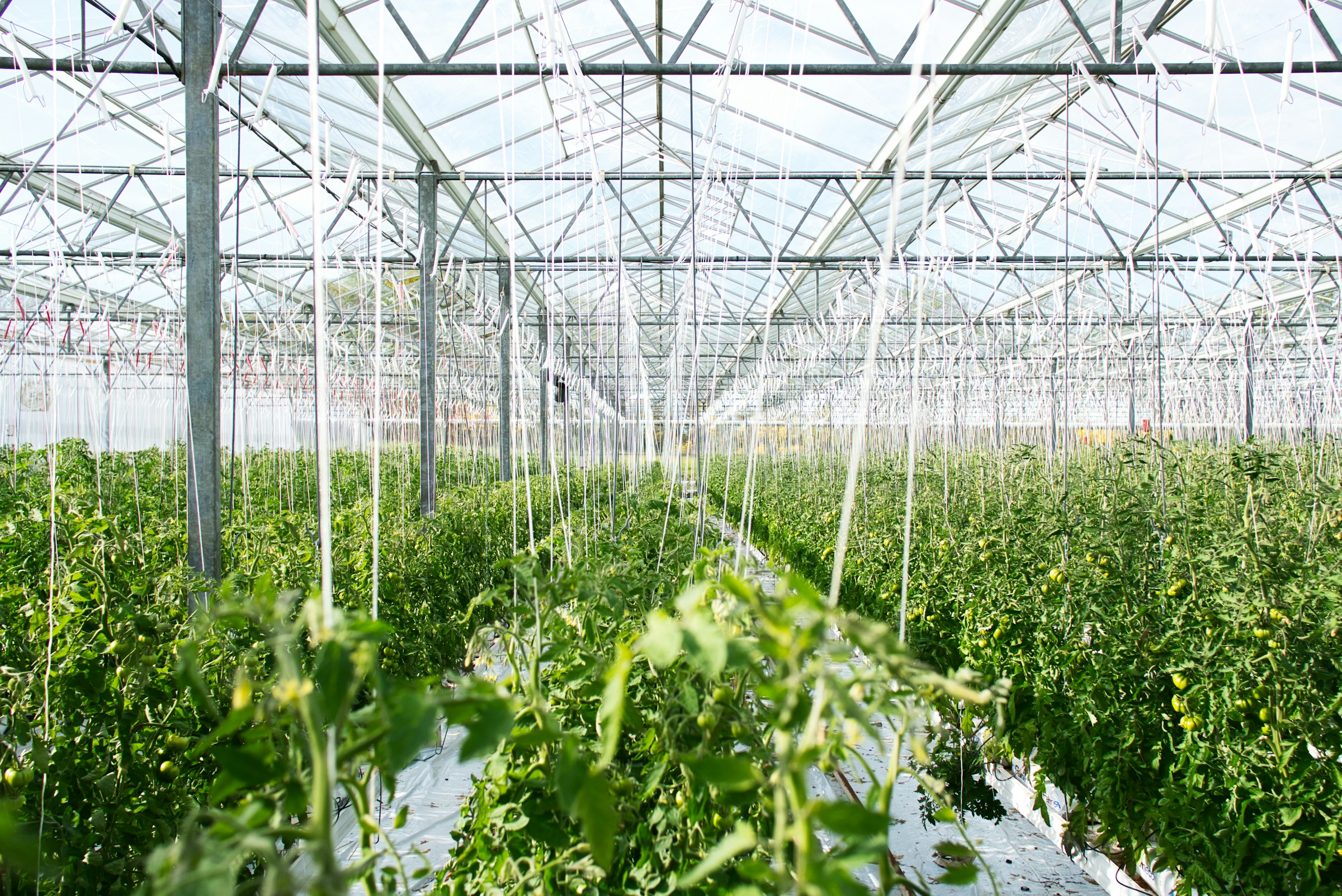
“I was working with temperature-responsive materials during my PhD at Bristol and noticed they turned white as they heated. We did market research and found growers were painting greenhouses with chalk to keep them cool, blocking the light their crops need. That was the start.”
— Dr Siân Fussell, Co-founder & CTOHow it works
The material contains a temperature-responsive polymer. Below its switching temperature the polymer sits in a transparent phase, and visible light passes through normally. Above it, the polymer scatters light — the material reads as a soft, even white, and a portion of incoming solar radiation is reflected back out of the glass before it becomes interior heat. As the glass cools, the polymer returns to its transparent state. This cycle can repeat thousands and thousands of times.
The switching point is a function of the polymer formulation. We tune it for the application, typically between 25°C and 35°C surface temperature.
Why white, not dark
Most adaptive glazing reduces solar gain by darkening. Dark glass absorbs the energy it stops from passing through, then re-emits it as heat — partly back into the building. A white material scatters the energy and reflects a larger share of it back outside before it becomes interior heat. The interior stays cooler, and daylight quality stays diffuse rather than dim.
How it compares
| Standard glazing | Tinted / low-e glass | Electrochromic | Albotherm | |
|---|---|---|---|---|
| Adapts to temperature | No | No | Manual / programmed | Yes — automatic |
| Power required | None | None | Yes — wired | None |
| Reduces solar gain at peak | Limited | Constant, year-round | Yes, when triggered | Yes, only when needed |
| Daylight on cool days | Full | Reduced year-round | Full when clear | Full |
| Retrofit onto existing glass | n/a | Replacement only | Replacement only | Yes |
What it does
Four behaviours, each driven by the temperature of the glass surface.
Clear below the switching point
Below the switching temperature, the material is transparent. Daylight passes through unaltered.
White above the switching point
Above the switching temperature, the material scatters light. The white state intensifies as the surface heats further.
Fully reversible
Returns to transparent as the glass cools. Designed for repeated cycling across the lifetime of the glass.
Fully passive
No electrical input. The trigger is the temperature of the glass surface itself.

Curious how it behaves on your glass?
Tell us what you’re glazing and the climate it lives in. We’ll walk you through where the material fits.